
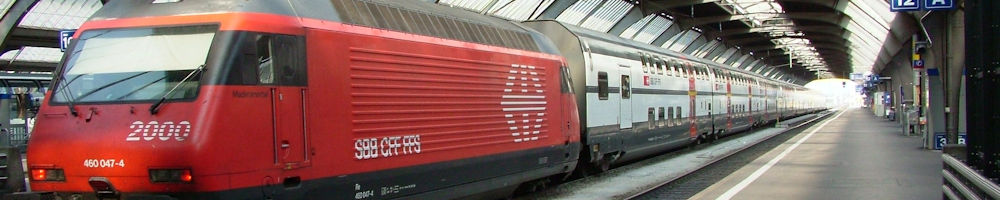
Swiss Railways train in Zurich Station
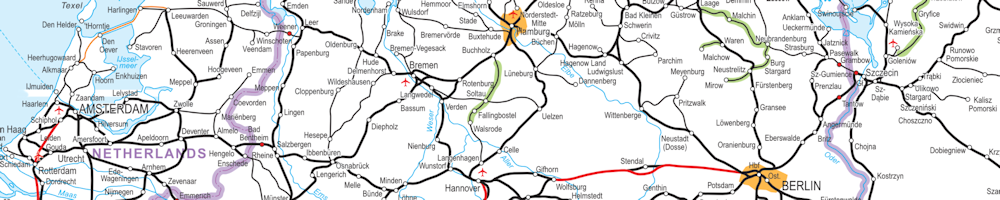
For me the journey is part of the experience and I get as much pleasure out of that as I do from exploring my destinations. Often I use fast trains, but, sometimes, I choose slower trains or more circuitous routeings. Planning starts with selecting my start and end dates, then choosing the principal places I wish to visit and working out a rough itinerary in my mind. Then with the help of international and individual country rail planners I come up with a schedule. This schedule gets fine-tuned several times before leaving and, most importantly, during my trip.
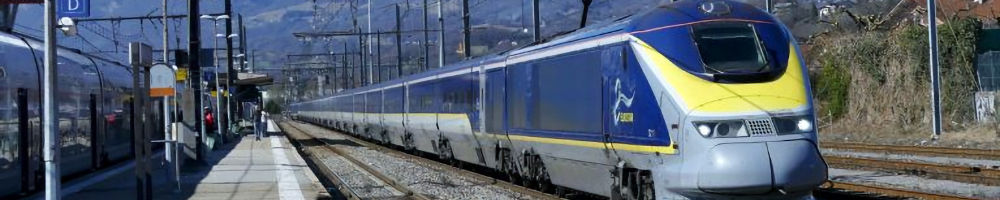
For my September 2026 trip my main objectives were to visit Bratislava, Plauen, Poznan, Gdansk, Szczecin, and Bod Doberan. The outward journey was by Eurostar, Deutsche Bahn ICE and OBB Railjet to Wien thence to Bratislava. These three icons of twenty-first century rail travel were hassle free and by stopping twice overnight I was able to ride München’s newest tram line and explore the delightful city of St. Pölten in Austria.
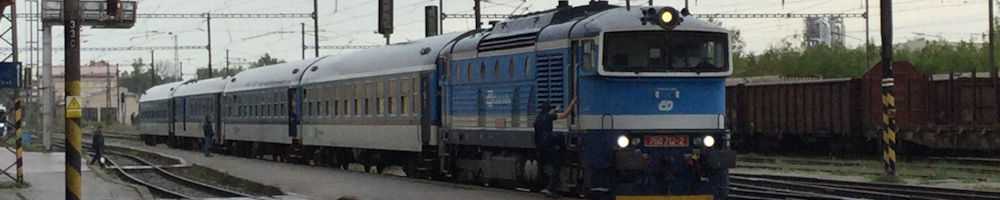
Moving on after Bratislava I opted not to take the direct train to Dresden and change there for Plauen, a journey that can easily be done in a day. Instead I travelled back to Wien HBF and took tram D from right under the platforms across the city to Franz-Josefs-Bahnhof where I boarded a regional train for Ceske Velenice and changed there for Ceske Budejovice. This turned out to be a delightful journey and gave me the chance to re-acquaint myself with the latter city with an overnight stay. The next day, instead of taking the direct route via Praha and Dresden, I took the local train to Plzen where I had an hour to watch trolleybuses and trams before taking a train via Cheb to Sokolov. From here I took another local train through forests and hills over the border into Germany and on to Plauen. Another truly delightful journey.
For the next part of my journey I again chose to take two days instead of one. Day one took me from Plauen to Gera where I changed for Leipzig. Here I had an hour before taking the train to Cottbus, a delightful town close to the Polish border. The next day I took a mid-morning train to Ruhland where I had an hour in this village before getting the Eurocity train to Wroclaw where I changed onto PKP Intercity for Poznan.
From Poznan to Gdansk is an easy day’s journey by PKP Intercity trains but I took two. This allowed me time to explore Bydgoszcz before spending the night in Grudziadz. The next day I took the train to Elblag and on to Gdansk, another circuitous route by local trains. After a few days in Gdansk I took the direct train to Szczecin. From Szczecin I travelled by local train to Neu-Brandenburg and Stralsund, thence by ICE to Rostock and finally another local train to Bad Doberan where the Molli steam train stops in the main street right outside my hotel.
The main purpose of my visit was to ride the steam railway which I did the following morning after which the plan was to return to Rostock and take a direct ICE from there to Bremen. But then with a quick replanning of my route I took a regional express (RE) from Rostock to Schwerin where I spent an hour before picking up the ICE to Bremen. The RE train was double-deck affording me great views across the countryside.
Bremen to Amsterdam was to be an ICE at 09.44 to Osnabruck connecting with another ICE to Amsterdam arriving at 14.09. My hotel was next to the station so after breakfast I popped in to check the departure boards and discovered that the previous 07.44 ICE had been cancelled. Quickly checking online I discovered it had been re-routed due to signalling problems. Enquiring at the DB info point I was told that everything should be OK in time for the next ICE but to play safe I could take the RE train to Osnabruck. I followed their advice and took this, another double-deck train. At Osnabruck, I discovered that there was a local train travelling along the same line as the ICE to Hengelo leaving in thirty-five minutes. I purchased a sandwich and a cake for lunch at the station bakery and caught this local train. At Hengelo I planned to wait for the ICE but as there was a Dutch IC train to Utrecht leaving before the German ICE it so I took that instead – again a double-deck train.
From Utrecht to Amsterdam Centraal IC trains run every ten minutes so I popped over to the nearby tram stop to observe the comings and goings before continuing my journey on another double-deck train arriving at 14.10, fifteen minutes before the delayed ICE.
The final leg of my trip was planned as a direct journey on the ECD (Euro City Direct) train from Amsterdam Zuid to Bruxelles Midi and a mid-afternoon Eurostar to London. A look at the Dutch rail journey planner revealed another option. So at 09.00 as crowds of tourists with their large cases waited on platform 4 for the high speed line supplement attracting ECD, I boarded another Dutch double-deck train on platform 3 and enjoyed an upper-deck view as we took the classic route through Leiden, Den Haag and Delft to Rotterdam. Yes it was twenty minutes longer but on a far less crowded train. At Rotterdam I took the ECC (Euro City Connect) train via Breda to Antwerpen where I changed on to a double-deck Belgian IC train to Bruxelles arriving at 12.11, just in time to change my ticket and catch an earlier 12.56 Eurostar to London.
Apart from the slower pace, the regional and local trains afforded a greater enjoyment of the ever-changing rural and urban landscape and gave a different perspective on life. Travelling companions are not other tourists going from A to B but locals going about their daily life. Scholars travelling to or from college or school, workers commuting, people enjoying leisure or retail therapy, grand-parents with grand-children, school parties on a trip and so much more life all around me. I may not understand the language but I get the sense of what is happening and some of it surprises me.
The young musician reading hand-written notes alongside a music score. The budding mathematician studying hand-written formulae. People of all ages reading books, printed not on a device. People unwrapping home-made sandwiches covered in foil. Young women putting their make-up on. Those laden with shopping, and those travelling with nothing but themselves. Individuals, families, couples and groups. With ninety percent of the conversation in the local language I am reminded where I am and why I’m there whilst the odd snippet of English and other languages reminds that there is a larger world out there. Sometimes I have been engaged in conversation by locals curious as to why I am travelling on that train. All part of life’s rich tapestry.
Next time you travel I encourage you all to take some slower trains and see the world at a more leisurely pace
Ian Ring